

Home State: NSW (Sydney, Aus)
Offical Sport: Triathlon
Socials: https://www.instagram.com/jess_oppenheim?utm_source=ig_web_button_share_sheet&igsh=ZDNlZDc0MzIxNw==
Sporting Accomplishments:
Represented Australia at the 2025 World Triathlon Age-Group Championships, F20–24
2nd Age Group at Husky Triathlon 2026 — first female across the line
3rd F20–24 at TriNSW Club Championships, February 2026
20th Age Group / 99th overall at HOKA Runaway Sydney Half Marathon, May 2026
1st Age Group at Sparke Helmore Sydney Sprint Triathlon, 2025
2025–26 Balmoral Triathlon Club Scholarship Athlete
Coached by Energy Link Performance Coaching, supported by SquareOne Physio
How did you get into the sport?
I came into triathlon through running first — I started racing half marathons and shorter road events and kept getting drawn to the idea of building a more complete athlete. The first time I did a Balmoral club race I was hooked: the variety, the early-morning swim sets, the long Sunday rides with Pastries.cc, all of it just clicked. Triathlon is the only sport where every session feels like it’s building on the last one, and the people you train with become a huge part of the why.
Hardest thing about your sport?
The honest answer is volume management. Stacking 20+ hours of training a week across three disciplines, on top of life, means recovery, fuelling and sleep have to be dialled in or the whole thing falls over quickly. I’m also vegan, which means I have to be properly intentional about getting in the calories and recovery I need — there’s no winging it. The other hard part is the patience: results in long-course come from years of consistent work, not single sessions.
What does your regular training week consist of?
A typical week is around 20 hours, split:
Swim: ~6.5km across 3 squad sessions (Balmoral)
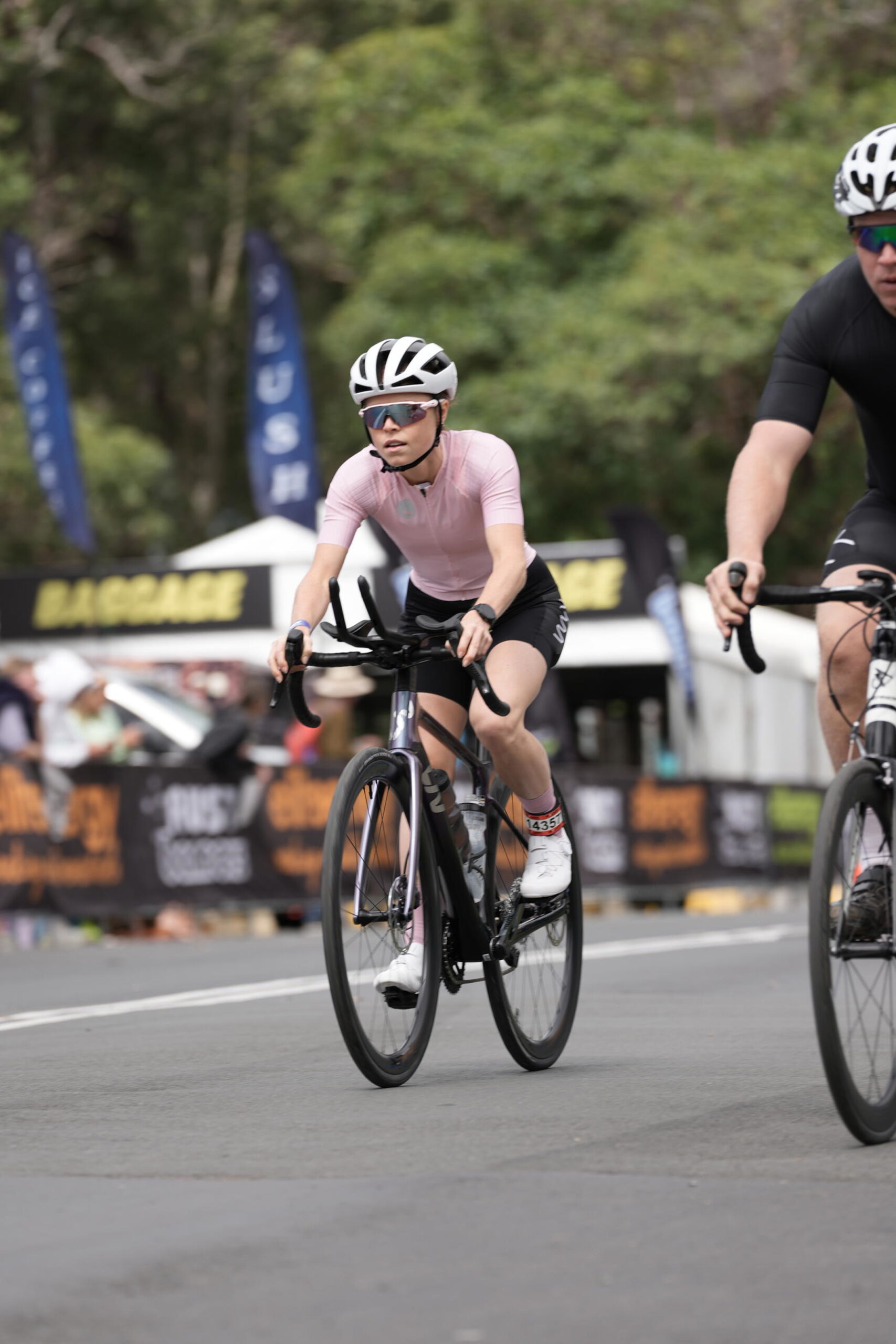
Bike: 180–230km across 4 rides, including a long Sunday with Pastries.cc and 1–2 interval sessions
Run: ~40km across 4 runs — one long, one intervals, two easy
Strength: 2 sessions at SquareOne for prehab and durability
One full rest day, with the rest of recovery built around fuelling and sleep
How do you keep motivated?
The training group is most of it. I’ve got Balmoral on the pool deck at 5am, Pastries.cc on the Sunday rides, and a coach at Energy Link who actually knows what I need. When you’ve got people expecting you, motivation stops being something you have to summon. The rest is the goal itself — chasing a 70.3 Worlds qualifying slot is concrete enough that every session has a reason. And then there’s the contrast: I spend a lot of my week sitting at a desk, so the racing and the long rides are what make the whole week make sense.
Goals (Future Plans and Career Expectations):
Short-term: qualify for the 70.3 World Championships at IRONMAN 70.3 Port Macquarie on 18 October 2026, in F20–24. Medium-term: move up to full IRONMAN distance and target Kona qualification within the next 3–5 years. Long-term: keep racing internationally as a strong age-grouper while building a career outside the sport that lets me do this properly for the long run.
Best Piece of Advice You Have Received:
“Consistency beats intensity.” From my coach early on — the idea that the athletes who improve year over year aren’t the ones doing the hardest sessions, they’re the ones who show up week after week, recover properly, and don’t blow themselves up chasing single sessions. It’s reframed how I think about every training block and every race build.